なまこの豆知識
赤・青の違い、旬と禁漁期、部位ごとの加工品、栄養成分、歴史、そして仕入れ時に知っておきたいルールまで。1972年創業、愛媛県今治市の海産物加工卸・森海産物が、公的機関や学術資料をもとになまこの基礎知識をまとめました。
スーパー・小売店/飲食店/食品商社/料亭の仕入れご担当者様向け
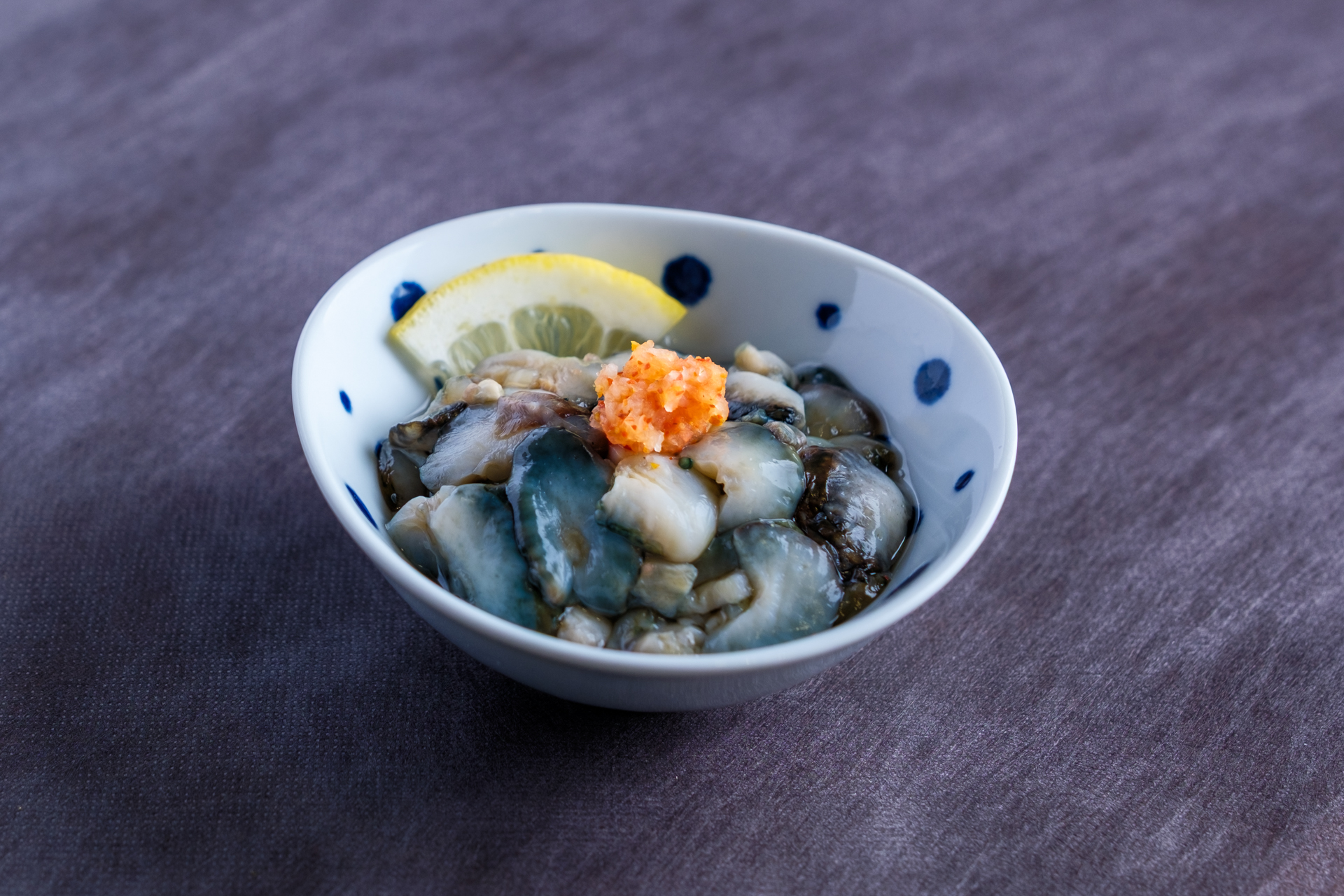
- 赤・青・黒なまこはすべて同じマナマコ。赤は外海の岩礁、青・黒は内湾の砂泥底に多く、西日本では赤が高値で取引されます。
- 秋〜春に活発で、夏は身がやせて「夏眠」に入ります。愛媛県では4月1日〜5月31日は採捕禁止です。
- なまこ(生)は100gあたり22kcal・たんぱく質4.6g・マグネシウム160mg(日本食品標準成分表)。
- 腸はこのわた、卵巣はこのこ、このこを干すとばちこ(くちこ)になります。
- なまこは水産流通適正化法の対象で、事業者間の情報伝達と取引記録の作成・保存が義務です。
1. なまこの基本データ
日本で一般に食用とされる「なまこ」は、マナマコという種です。ウニやヒトデと同じ棘皮動物の仲間で、食品成分表でも「なまこ」はマナマコとして収載されています。
| 標準和名 | マナマコ |
|---|---|
| 学名 | Apostichopus japonicus |
| 分類 | 棘皮動物(ウニ・ヒトデの仲間) |
| 呼び分け | 体色によって「赤」「青」「黒」と呼ばれる(いずれも同じ種)[6] |
| 雌雄 | 外見では区別できない。成熟が進むと生殖巣が大きくなる[8] |
| よく活動する時期 | 秋〜春。夏は身がやせて味が落ちるとされる[7] |
| 愛媛県の採捕禁止期間 | 4月1日〜5月31日(愛媛県漁業調整規則)[9] |
| 廃棄率(生) | 20%(内臓等)[1] |
名前の由来にも触れておきます。なまこは古くは「こ」と呼ばれており、その腸であることから「こ・の・わた=このわた」と名付けられたと農林水産省は説明しています[14]。「なまこ」は「生(なま)のこ」の意とされます[15]。
2. 赤・青・黒なまこの違い
売場や献立では「赤なまこ」「青なまこ」と分けて扱われますが、生物としてはどれも同じマナマコです。ただし、住む場所や遺伝的な特徴には違いがあることが分かっています[6]。
| 赤なまこ | 青なまこ・黒なまこ | |
|---|---|---|
| 主な生息場所 | 外海に近い岩礁地帯 | 内湾の砂泥底 |
| 遺伝的な違い | 青・黒とは遺伝的に異なる | 青と黒は明確に分けられない |
| 取引 | 西日本では高値で取引される | — |
出典:青森県産業技術センター『ナマコ種苗生産マニュアル』[6]、大阪府「おおさか海の生きもの図鑑」[7]
価格や使い分けは、産地・時期・サイズ・鮮度によって変わります。規格や用途に合わせたご提案は、お気軽にお問い合わせください。
3. 旬と生態(夏眠・産卵・成長)
夏は「夏眠」、秋〜春が活動期
なまこは水温が上がると岩の下などにもぐり、ほとんど動かず餌もとらなくなります。これを夏眠といいます。大阪府の資料では、なまこは秋から春に活発に活動し、夏は身がやせて味も落ちるとされています[7]。
夏眠に入る水温の目安は海域によって異なり、陸奥湾(青森)では18℃以上で内臓が縮んで夏眠に入る[6]、大阪湾では水温が23℃以下に下がるのを待って活動を再開する[7]、と報告されています。
産卵期
産卵期も地域差があり、和歌山県では北部の加太で4〜6月頃、中部以南で3〜4月とされています[8]。なお愛媛県では、4月1日〜5月31日がなまこの採捕禁止期間に定められています[9]。
成長のスピード
大阪府の資料では、体長はおおよそ1年で6cm、2年で13cm、3年で18cmとされています[7]。ただし個体差が非常に大きいことも指摘されています[6]。
4. 瀬戸内・愛媛のなまこ漁と資源管理
農林水産省の「漁業・養殖業生産統計」によると、2024年のなまこ漁獲量は次のとおりです[10]。瀬戸内海区だけで全国の約2割を占めます。
| 区分 | 漁獲量(2024年) | 全国に占める割合 |
|---|---|---|
| 全国 | 5,288トン | 100% |
| 瀬戸内海区 | 1,133トン | 約21% |
| 愛媛県 | 157トン | 約3% |
出典:農林水産省「漁業・養殖業生産統計」(e-Stat)[10]。割合は当社で算出。
資源を守るための取り組み
- 採捕禁止期間:愛媛県漁業調整規則により、なまこは毎年4月1日〜5月31日の採捕が禁止されています[9]。
- 禁漁区の輪番:愛媛県上島町の漁協支所の「浜の活力再生プラン」では、なまこの採捕禁止区域を毎年設けて輪番にすることや、増養殖の検討が掲げられています[11]。
5. 部位と加工品(このわた・このこ・ばちこ・干しなまこ)
なまこは、身だけでなく内臓や卵巣まで、それぞれ別の食品として流通します。名前が似ていて混同されやすいので、整理しておきます。
| 名称 | 使う部位・作り方 | 主な用途 |
|---|---|---|
| なまこ(生) | 体(身)。内臓を除いて使う | 薄切りにして酢の物など |
| このわた | 腸を塩漬けにして熟成[13] | 酒肴・珍味。江戸時代から日本三大珍味のひとつ[14] |
| このこ | 卵巣(生) | 酒肴・珍味 |
| ばちこ(くちこ) | このこを干したもの | 酒肴・珍味。石川県・能登の七尾湾が産地として知られる[16] |
| 干しなまこ(いりこ) | 加熱して乾燥させたもの | 中華料理の高級食材。水で戻して使う |
「このこ」と「ばちこ」は別の商品です。生の卵巣が「このこ」、それを干したものが「ばちこ(くちこ)」で、食感も使い方も異なります。
各加工品の詳しい解説は、次の記事をご覧ください。
6. 栄養成分(食品成分表の数値)
文部科学省「日本食品標準成分表(八訂)増補2023年」に収載されている、なまこ(生)とこのわたの主な成分です。数値は可食部100gあたりです[1][2]。
| 成分 | なまこ(生) | このわた |
|---|---|---|
| エネルギー | 22 kcal | 54 kcal |
| 水分 | 92.2 g | 80.2 g |
| たんぱく質 | 4.6 g | 11.4 g |
| 脂質 | 0.3 g | 1.8 g |
| 炭水化物 | 0.5 g | 0.5 g |
| カリウム | 54 mg | 330 mg |
| カルシウム | 72 mg | 41 mg |
| マグネシウム | 160 mg | 95 mg |
| 鉄 | 0.1 mg | 4.0 mg |
| 亜鉛 | 0.2 mg | 1.4 mg |
| ビタミンB12 | 2.3 μg | 11.0 μg |
| 食塩相当量 | 1.7 g | 4.6 g |
出典:文部科学省「日本食品標準成分表(八訂)増補2023年」食品番号10372・10373[1][2]。「このこ」「ばちこ(くちこ)」は成分表に収載されていません。
なまこ(生)は水分が9割以上で低エネルギー、ミネラルではマグネシウムが多いのが特徴です。一方、このわたは塩漬けのため食塩相当量が4.6gと高く、鉄やビタミンB12が多く含まれます。
成分の研究も進んでおり、マナマコの体からはホロトキシンと呼ばれるサポニン類[3]や、ナマコ類の体壁に特有のフコシル化コンドロイチン硫酸[4]が報告されています。これらは成分として確認されているもので、食品として食べたときの健康効果を示すものではありません。
7. 取り扱い・保管と下処理
活なまこはデリケート
- 温度に注意:北海道立総合研究機構の保管試験では、20℃での保管は適さず、1日保管するなら10℃、2日なら0℃での保管が必要とされています。保管中には体の表面が溶ける「表皮溶解」が起こることがあります[12]。
- ストレスで内臓を吐き出す:高い水温や振動などのストレスで内臓を吐き出すことがあり、同試験では酸素を送ることで劣化が抑えられました[12]。
- 真水に弱い:成体は淡水で衰弱するとされています[6]。洗うときは手早く済ませましょう。
酢の物にするまでの基本の下処理
農林水産省「うちの郷土料理」で紹介されている石川県の「なまこの酢の物」の手順をもとにした、基本の流れです[17]。
塩でもむ
塩をふってもみ、表面のぬめりを取ります。
内臓と砂を除く
内臓を取り除き、中の砂をきれいに洗い流します。内臓はこのわたとして別に活用できます。
薄く切って和える
薄く切り、合わせ酢で酢の物に仕上げます。
このほか、番茶やほうじ茶にくぐらせてから使う「茶ぶり」という方法もあります。お茶の種類・温度・時間はレシピによって幅があるため、メニュー化の際は試作で食感を確認することをおすすめします。
8. 仕入れ・販売で知っておきたいルール
水産流通適正化法の対象です
なまこは、違法な漁獲物の流通を防ぐための「水産流通適正化法」で、アワビなどとともに特定第一種水産動植物に指定されています[18]。
- 取り扱う事業者には、漁獲番号などの情報の伝達と取引記録の作成・保存が義務付けられています。
- 輸出する場合は、適法に採捕されたことを証する書類の添付が必要です。
愛媛県内でも、この法律にもとづく勧告が市場に対して行われた事例があります[19]。仕入れ先を選ぶ際は、必要な情報がきちんと伝達されるかを確認しておくと安心です。制度の詳細や最新の改正内容は、水産庁の案内をご確認ください。
表示・広告のルール
健康効果の表示については、前述の「栄養成分」の注意をご覧ください。このわたなど塩漬け品は食塩相当量が多いため、商品説明では成分表の数値を参考にするのがおすすめです。
9. なまこの歴史と文化
なまこは、日本でも中国でも古くから重んじられてきた食材です。資料で確認できる主な出来事を、年代順に紹介します。
- 712年『古事記』アメノウズメが魚たちに天孫に仕えるかを問うた際、答えなかった海鼠(なまこ)の口を小刀で裂いた、という話が記されています。「なまこの口が裂けているのはこのため」とされます[20]。
- 732年 能登からの木簡能登国から平城京へ熬海鼠(いりこ)を納めたことを示す木簡が残っています[16]。
- 927年『延喜式』熬海鼠は7か国から、海鼠腸(このわた)は能登国のみから貢納する品目として記されています[16]。
- 明代(中国)『五雑組』には「その性は温補で人参に匹敵する。ゆえに海参という」とあり、中国名「海参」の由来とされています[21]。明末の宮中の記録『酌中志』には、先帝がなまこ・あわび・ふかひれなどを煮込んだ料理を好んだとあります。
- 江戸時代 元禄期〜「俵物三品」干しなまこ(煎海鼠)は干鮑・鱶鰭とともに「俵物三品」と呼ばれ、産出が減った銅に代わる輸出品として長崎から中国へ送られました。1785年からは長崎会所の俵物役所が直接集荷しています[22]。
- 江戸時代 三大珍味このわたは江戸時代から日本三大珍味のひとつとして知られ、能登・尾張・三河のこのわたが貢物として使われていたようです、と農林水産省は紹介しています[14]。
俳句の世界では冬の季語
「海鼠(なまこ)」は冬の季語です。松尾芭蕉の「生きながら一つに冰(こお)る海鼠哉」や、向井去来の「尾頭のこゝろもとなき海鼠哉」(『猿蓑』)など、形のとらえどころのなさを詠んだ句が残っています[23]。
10. 輸出の動向
日本のなまこは、干しなまこなどの形で海外にも輸出されています。主な輸出先は香港です。
| 年 | なまこ(調製)の輸出額 | 補足 |
|---|---|---|
| 2024年 | 105.0億円 | うち香港向けが86.4%[25] |
| 2025年 | 78.93億円 | 前年比24.8%減。香港・台湾向けで引き合いが弱まり単価が下落したことなどによる[24] |
出典:農林水産省「2025年の農林水産物・食品の輸出実績」[24]、JETRO香港資料[25]
11. 森海産物のなまこ取り扱い
森海産物は、愛媛県今治市で1972年に創業した海産物の加工卸です。なまことその加工品を、業務用に取り扱っています。
| 取扱品目 | 赤なまこ・青なまこ/このわた/このこ(なまこの卵巣)/ばちこ(このこを干したもの) |
|---|---|
| 加工・出荷 | 水揚げその日のうちに加工・発送。急速冷凍設備があります |
| OEM・PB | 中身(内容物)の製造に対応。パッケージ資材はお客様にご支給いただきます |
| サンプル | 有償にてご用意します |
| 規格・数量・納品形態 | 時期や在庫によって異なるため、個別にご相談ください |
なまこ・このわた・このこ・ばちこの仕入れはご相談ください
スーパー・小売店、飲食チェーン、食品商社、料亭・寿司店・割烹の皆さまからのお問い合わせをお待ちしています。
12. よくあるご質問
赤なまこと青なまこは別の生き物ですか?
どちらも同じマナマコで、体色による呼び分けです。遺伝的には赤は青・黒と異なり、青と黒は明確に分けられないとされています。赤は外海の岩礁地帯、青・黒は内湾の砂泥底に多く、西日本では赤が高値で取引されています。
なまこの旬はいつですか?
秋から春に活発に活動し、夏は身がやせて味が落ちるとされます。水温が上がると「夏眠」に入ります。愛媛県では4月1日〜5月31日はなまこの採捕が禁止されています。
このわた・このこ・ばちこの違いは何ですか?
このわたは腸を塩漬けにして熟成させたもの、このこは卵巣、ばちこ(くちこ)はこのこを干したものです。このわたは江戸時代から日本三大珍味のひとつとして知られています。
なまこのカロリーと栄養成分は?
日本食品標準成分表(八訂)増補2023年によると、なまこ(生)は可食部100gあたりエネルギー22kcal、たんぱく質4.6g、カルシウム72mg、マグネシウム160mg、亜鉛0.2mg、食塩相当量1.7gです。
なまこを仕入れる際に必要な法的手続きはありますか?
なまこは水産流通適正化法の特定第一種水産動植物で、取り扱う事業者には漁獲番号などの情報伝達と取引記録の作成・保存が義務付けられています。輸出時は適法に採捕されたことを証する書類が必要です。詳細は水産庁の案内をご確認ください。
出典・参考資料
- 文部科学省「日本食品標準成分表(八訂)増補2023年」なまこ 生(10372) 食品成分データベース
- 同 このわた(10373) 食品成分データベース
- Maltsev II, et al. Comp Biochem Physiol B. 1984(マナマコのホロトキシンA1・B1) PubMed
- Pomin VH. Curr Med Chem. 2015(フコシル化コンドロイチン硫酸) PubMed
- 消費者庁「健康食品に関する景品表示法及び健康増進法上の留意事項について」 PDF
- 青森県産業技術センター「ナマコ種苗生産マニュアル」 PDF
- 大阪府「おおさか海の生きもの図鑑」マナマコ Web
- 和歌山県水産試験場「ナマコマニュアル」 PDF
- 愛媛県漁業調整規則 PDF
- 農林水産省「漁業・養殖業生産統計」2024年 e-Stat
- 浜の活力再生プラン(上島町) Web
- 北海道立総合研究機構 活ナマコの保管に関する資料 PDF
- 農林水産省「にっぽん伝統食図鑑」このわた・くちこ Web
- 農林水産省「消費者の部屋」このわた Web
- 日本大百科全書(ニッポニカ)「なまこ」 コトバンク
- 金沢大学考古学研究室「金沢大学考古学紀要」33号(2012) PDF
- 農林水産省「うちの郷土料理」なまこの酢の物(石川県) Web
- 水産庁「水産流通適正化法について」 Web
- 愛媛県 水産流通適正化法にもとづく勧告について Web
- 國學院大學「古事記ビューアー」天宇受売命 Web
- 謝肇淛『五雑組』巻九 Wikisource
- 長崎県「俵物について」 Web
- きごさい歳時記「海鼠」/『猿蓑』 Web
- 農林水産省「2025年の農林水産物・食品の輸出実績」 PDF
- JETRO「香港向け輸出のための品目別資料」 PDF
※本ページは一般的な知識の紹介を目的としており、特定の成分の効能・効果を示すものではありません。
※数値・制度は各出典の公開時点のものです(2026年9月確認)。
Sea Cucumber Guide
Red vs. blue varieties, season and closed season, products made from each part, nutrition data, history, and the rules buyers should know. Mori Seafood, a seafood processor and wholesaler founded in 1972 in Imabari, Ehime, has compiled this guide based on government and academic sources.
For buyers at supermarkets, restaurants, food trading companies and ryotei
- Red, blue and black sea cucumbers are all the same species (Japanese sea cucumber). Red ones are common on rocky reefs near the open sea; blue and black on sandy-muddy bottoms in bays. In western Japan, red ones trade at higher prices.
- They are active from autumn to spring and enter "aestivation" (summer dormancy). In Ehime, harvesting is prohibited from April 1 to May 31.
- Raw sea cucumber contains 22 kcal, 4.6 g protein and 160 mg magnesium per 100 g (Standard Tables of Food Composition in Japan).
- The intestines become konowata, the ovaries konoko, and dried konoko is bachiko (kuchiko).
- Sea cucumber is covered by Japan's Act on Ensuring the Proper Domestic Distribution and Importation of Specified Aquatic Animals and Plants, which requires businesses to pass on catch information and keep transaction records.
1. Basic Facts
The sea cucumber commonly eaten in Japan is the Japanese sea cucumber (manamako). It is an echinoderm, related to sea urchins and starfish.
| Japanese name | Manamako |
|---|---|
| Scientific name | Apostichopus japonicus |
| Classification | Echinoderm (related to sea urchins and starfish) |
| Color types | Called "red," "blue" or "black" by body color (all the same species)[6] |
| Sex | Cannot be distinguished externally; gonads enlarge as they mature[8] |
| Active period | Autumn to spring. In summer the flesh becomes thin and flavor declines[7] |
| Closed season in Ehime | April 1 – May 31 (Ehime Prefecture Fisheries Adjustment Regulations)[9] |
| Refuse rate (raw) | 20% (viscera, etc.)[1] |
In old Japanese, the sea cucumber was called "ko." According to Japan's Ministry of Agriculture, Forestry and Fisheries (MAFF), konowata literally means "the guts (wata) of the ko"[14], and namako is said to mean "raw ko"[15].
2. Red, Blue and Black
Although markets and menus distinguish "red" and "blue" sea cucumbers, biologically they are the same species. However, differences in habitat and genetics have been reported[6].
| Red | Blue / Black | |
|---|---|---|
| Main habitat | Rocky reefs near the open sea | Sandy-muddy bottoms in bays |
| Genetics | Genetically different from blue and black | Blue and black cannot be clearly separated |
| Trade | Traded at higher prices in western Japan | — |
Sources: Aomori Prefectural Industrial Technology Research Center [6]; Osaka Prefecture marine life guide [7]
Prices and uses vary by origin, season, size and freshness. Please contact us for proposals matched to your specifications.
3. Season and Biology
Summer dormancy; active from autumn to spring
When water temperatures rise, sea cucumbers hide under rocks, barely move and stop feeding. This is called aestivation. According to Osaka Prefecture, they are active from autumn to spring, while in summer the flesh becomes thin and flavor declines[7].
The temperature threshold differs by region: in Mutsu Bay (Aomori), sea cucumbers enter aestivation above 18°C with their viscera shrinking[6]; in Osaka Bay, they resume activity once the water cools below 23°C[7].
Spawning season
In Wakayama Prefecture, spawning occurs around April–June in Kada (north) and March–April in central and southern areas[8]. In Ehime, harvesting is prohibited from April 1 to May 31[9].
Growth
Osaka Prefecture reports body lengths of roughly 6 cm at 1 year, 13 cm at 2 years and 18 cm at 3 years[7], though individual variation is very large[6].
4. Fishery and Resource Management in Setouchi and Ehime
According to MAFF's Fishery and Aquaculture Production Statistics, the 2024 sea cucumber catch was as follows[10]. The Seto Inland Sea area alone accounts for about one-fifth of the national total.
| Area | Catch (2024) | Share of national total |
|---|---|---|
| Japan | 5,288 t | 100% |
| Seto Inland Sea area | 1,133 t | approx. 21% |
| Ehime Prefecture | 157 t | approx. 3% |
Source: MAFF Fishery and Aquaculture Production Statistics (e-Stat) [10]. Shares calculated by Mori Seafood.
Resource management
- Closed season: Under Ehime's Fisheries Adjustment Regulations, harvesting sea cucumber is prohibited every year from April 1 to May 31[9].
- Rotating no-take zones: Fishery revitalization plans for cooperative branches in Kamijima, Ehime, include setting sea cucumber no-take zones on a yearly rotation and considering stock enhancement[11].
5. Parts and Processed Products
Not only the body but also the intestines and ovaries are sold as separate foods. Because the names are similar, here is a summary.
| Name | Part / Method | Main use |
|---|---|---|
| Namako (raw) | Body, with viscera removed | Thinly sliced, e.g. in vinegared dishes |
| Konowata | Intestines salted and fermented[13] | Delicacy with sake. Known as one of Japan's three great delicacies since the Edo period[14] |
| Konoko | Ovaries (raw) | Delicacy with sake |
| Bachiko (Kuchiko) | Dried konoko | Delicacy with sake. Nanao Bay in Noto, Ishikawa is a known production area[16] |
| Dried sea cucumber (iriko) | Heated and dried | Premium ingredient in Chinese cuisine; rehydrated before use |
Konoko and bachiko are different products. Raw ovaries are konoko; dried, they become bachiko (kuchiko), with a different texture and use.
6. Nutrition Data
Main components of raw sea cucumber and konowata listed in the Standard Tables of Food Composition in Japan (8th Revised Edition, 2023 Supplement) by the Ministry of Education (MEXT). Values are per 100 g of edible portion[1][2].
| Component | Sea cucumber (raw) | Konowata |
|---|---|---|
| Energy | 22 kcal | 54 kcal |
| Water | 92.2 g | 80.2 g |
| Protein | 4.6 g | 11.4 g |
| Fat | 0.3 g | 1.8 g |
| Carbohydrate | 0.5 g | 0.5 g |
| Potassium | 54 mg | 330 mg |
| Calcium | 72 mg | 41 mg |
| Magnesium | 160 mg | 95 mg |
| Iron | 0.1 mg | 4.0 mg |
| Zinc | 0.2 mg | 1.4 mg |
| Vitamin B12 | 2.3 μg | 11.0 μg |
| Salt equivalent | 1.7 g | 4.6 g |
Source: MEXT Standard Tables of Food Composition in Japan (8th Revised Edition, 2023 Supplement), food nos. 10372 and 10373 [1][2]. Konoko and bachiko are not listed.
Raw sea cucumber is over 90% water and low in energy, and relatively rich in magnesium. Konowata, being salted, has a high salt equivalent (4.6 g) and contains more iron and vitamin B12.
Research has identified saponins called holotoxins in the Japanese sea cucumber[3] and fucosylated chondroitin sulfate characteristic of sea cucumber body walls[4]. These are identified components and do not indicate any health effect from eating the food.
7. Handling, Storage and Preparation
Live sea cucumbers are delicate
- Temperature: In storage tests by the Hokkaido Research Organization, 20°C was unsuitable; storage at 10°C was needed for one day and 0°C for two days. "Skin dissolution" can occur during storage[12].
- Stress: High water temperature or vibration can cause sea cucumbers to expel their viscera; in the same tests, aeration reduced deterioration[12].
- Fresh water: Adults weaken in fresh water[6]. Rinse quickly.
Basic preparation for vinegared sea cucumber
Based on the Ishikawa Prefecture recipe for "namako no sunomono" introduced by MAFF[17].
Rub with salt
Rub with salt to remove surface slime.
Remove viscera and sand
Remove the viscera and rinse out the sand. The intestines can be used separately as konowata.
Slice and dress
Slice thinly and dress with vinegar sauce.
Another method, "chaburi," involves dipping the sea cucumber in bancha or hojicha tea. Tea type, temperature and time vary between recipes, so we recommend test batches to check texture when developing a menu.
8. Rules for Buying and Selling
Covered by the Act on Proper Distribution of Specified Aquatic Animals and Plants
To prevent the distribution of illegally caught seafood, sea cucumber is designated a Specified Type I aquatic species under this act, together with abalone and others[18].
- Businesses handling it must pass on information such as catch numbers and create and keep transaction records.
- Exports must be accompanied by documents certifying legal harvest.
In Ehime, a recommendation has been issued to a market under this act[19]. When choosing suppliers, check that the required information is properly passed on. See the Fisheries Agency website for details and the latest amendments.
9. History and Culture
Sea cucumber has long been valued in both Japan and China. Key events confirmed in historical sources:
- 712 — KojikiThe goddess Ame-no-Uzume asked the creatures of the sea whether they would serve the heavenly descendant; the sea cucumber did not answer, so she slit its mouth with a small knife — said to be why its mouth is split today[20].
- 732 — Wooden tablet from NotoA wooden tablet records iriko (dried sea cucumber) sent from Noto Province to the capital Heijo-kyo[16].
- 927 — EngishikiIriko was a tribute item from seven provinces, and konowata was submitted only by Noto Province[16].
- Ming dynasty (China)The Wu Za Zu states that its nature is warming and nourishing, rivaling ginseng (renshen), "hence it is called haishen" (sea ginseng)[21]. The late-Ming palace record Zhuo Zhong Zhi notes that the former emperor favored a stew of sea cucumber, abalone and shark fin.
- Edo period (from the Genroku era) — TawaramonoDried sea cucumber, dried abalone and shark fin were called the "three tawaramono" and exported from Nagasaki to China in place of copper, whose output had declined. From 1785, the Tawaramono Office under the Nagasaki Kaisho collected them directly[22].
- Edo period — Three great delicaciesMAFF notes that konowata has been known as one of Japan's three great delicacies since the Edo period, and that konowata from Noto, Owari and Mikawa appears to have been used as tribute[14].
A winter season word in haiku
"Namako" is a winter season word (kigo). Haiku include Matsuo Basho's "Ikinagara hitotsu ni kōru namako kana" (still alive, frozen into one — sea cucumbers) and Mukai Kyorai's "Okashira no kokoromotonaki namako kana" (from Sarumino)[23].
10. Export Trends
Japanese sea cucumber is also exported, including in dried form. Hong Kong is the main destination.
| Year | Exports of sea cucumber (prepared) | Notes |
|---|---|---|
| 2024 | ¥10.50 billion | 86.4% to Hong Kong[25] |
| 2025 | ¥7.893 billion | Down 24.8% year on year, due in part to lower unit prices amid weaker demand in Hong Kong and Taiwan[24] |
Sources: MAFF 2025 agricultural, forestry and fishery export results [24]; JETRO Hong Kong report [25]
11. Sea Cucumber at Mori Seafood
Mori Seafood is a seafood processor and wholesaler founded in 1972 in Imabari, Ehime. We supply sea cucumber and its processed products for business use.
| Products | Red and blue sea cucumber / konowata / konoko (ovaries) / bachiko (dried konoko) |
|---|---|
| Processing | Processed and shipped on the day of landing. Quick-freezing facilities available |
| OEM / Private label | Contents only; packaging materials supplied by the client |
| Samples | Available for a fee |
| Specs, volume, delivery form | Vary by season and stock — please inquire |
Inquiries about sea cucumber, konowata, konoko and bachiko
We welcome inquiries from supermarkets, restaurant chains, food trading companies and ryotei.
12. FAQ
Are red and blue sea cucumbers different species?
No. Both are the Japanese sea cucumber, named by body color. Red is genetically distinct from blue and black, while blue and black cannot be clearly separated. Red is common on rocky reefs near the open sea, blue and black on sandy-muddy bottoms in bays; red trades at higher prices in western Japan.
When is sea cucumber in season?
They are active from autumn to spring; in summer the flesh thins and they enter aestivation. In Ehime, harvesting is prohibited from April 1 to May 31.
What is the difference between konowata, konoko and bachiko?
Konowata is salted and fermented intestines, konoko is the ovaries, and bachiko (kuchiko) is dried konoko. Konowata has been known as one of Japan's three great delicacies since the Edo period.
What are the calories and nutrients?
Per the Standard Tables of Food Composition in Japan (2023), raw sea cucumber has 22 kcal, 4.6 g protein, 72 mg calcium, 160 mg magnesium, 0.2 mg zinc and 1.7 g salt equivalent per 100 g edible portion.
Are there legal requirements when buying sea cucumber in Japan?
Yes. Sea cucumber is a Specified Type I aquatic species; businesses must pass on catch information and keep transaction records, and exports require documents certifying legal harvest. See the Fisheries Agency for details.
SOURCES
Sources [1]–[25] are listed in the Japanese version of this page (click "日本語" above). Most are Japanese government and academic publications.
This page is for general information and does not indicate any health effect of specific components. Figures and regulations are as published by each source (checked September 2026).
海参小知识
红参与青参的区别、时令与禁渔期、各部位加工品、营养成分、历史,以及采购时需要了解的规定。1972年创立于日本爱媛县今治市的海产品加工批发商——森海产物,根据政府机构与学术资料为您整理了海参的基础知识。
面向超市・零售店/餐饮店/食品贸易公司/日本料亭的采购负责人
- 红海参、青海参、黑海参均为同一物种(刺参)。红参多见于外海附近的岩礁,青参・黑参多见于内湾的沙泥底。在日本西部,红参的交易价格较高。
- 秋季至春季活跃,夏季进入"夏眠"。爱媛县每年4月1日至5月31日禁止采捕。
- 生海参每100克含22千卡热量、4.6克蛋白质、160毫克镁(日本食品标准成分表)。
- 肠制成海参肠(konowata),卵巢为海参卵(konoko),海参卵干燥后为干海参卵(bachiko/kuchiko)。
- 海参属于日本《水产流通适正化法》的规制对象,经营者须传递捕捞信息并制作、保存交易记录。
1. 海参基本资料
日本普遍食用的海参为刺参(日文:マナマコ),属于棘皮动物,与海胆、海星是近亲。
| 日文标准名 | マナマコ(刺参) |
|---|---|
| 学名 | Apostichopus japonicus |
| 分类 | 棘皮动物(海胆・海星的近亲) |
| 颜色类型 | 按体色称为"红""青""黑"(均为同一物种)[6] |
| 雌雄 | 无法从外观区分,成熟后生殖腺会变大[8] |
| 活跃期 | 秋季至春季。夏季肉质变瘦、风味下降[7] |
| 爱媛县禁止采捕期 | 4月1日至5月31日(爱媛县渔业调整规则)[9] |
| 废弃率(生) | 20%(内脏等)[1] |
日语中海参古称"こ(ko)"。据日本农林水产省介绍,"このわた(海参肠)"即"こ的肠"之意[14],而"なまこ"一词被认为是"生的こ"之意[15]。
2. 红参・青参・黑参的区别
市场与菜单上常将红参、青参分开,但在生物学上它们是同一物种。不过,其栖息环境与遗传特征存在差异[6]。
| 红参 | 青参・黑参 | |
|---|---|---|
| 主要栖息地 | 靠近外海的岩礁地带 | 内湾的沙泥底 |
| 遗传差异 | 与青参・黑参在遗传上不同 | 青参与黑参无法明确区分 |
| 交易 | 在日本西部以较高价格交易 | — |
出处:青森县产业技术中心[6]、大阪府海洋生物图鉴[7]
价格与用途因产地、季节、规格及鲜度而异。欢迎根据您的规格需求咨询我们。
3. 时令与生态
夏季"夏眠",秋季至春季为活跃期
水温升高时,海参会躲到岩石下方,几乎不活动也不进食,这被称为夏眠。据大阪府资料,海参在秋季至春季活跃,夏季肉质变瘦、风味下降[7]。
进入夏眠的水温因海域而异:青森县陆奥湾的报告为18°C以上时内脏萎缩并进入夏眠[6];大阪湾的报告为水温降至23°C以下后恢复活动[7]。
产卵期
以和歌山县为例,北部加太约为4至6月,中部以南为3至4月[8]。爱媛县规定4月1日至5月31日禁止采捕海参[9]。
生长速度
据大阪府资料,体长约为1年6厘米、2年13厘米、3年18厘米[7],但个体差异非常大[6]。
4. 濑户内海・爱媛县的海参渔业与资源管理
据日本农林水产省《渔业・养殖业生产统计》,2024年海参捕捞量如下[10]。仅濑户内海区就约占全国的五分之一。
| 区域 | 捕捞量(2024年) | 占全国比例 |
|---|---|---|
| 日本全国 | 5,288吨 | 100% |
| 濑户内海区 | 1,133吨 | 约21% |
| 爱媛县 | 157吨 | 约3% |
出处:农林水产省《渔业・养殖业生产统计》(e-Stat)[10]。比例由本公司计算。
资源保护措施
- 禁止采捕期:根据爱媛县渔业调整规则,每年4月1日至5月31日禁止采捕海参[9]。
- 轮换禁渔区:爱媛县上岛町渔协各支所的"渔村活力再生计划"中,列有每年设定并轮换海参禁渔区域、研究增养殖等措施[11]。
5. 部位与加工品
海参不仅是肉身,其肠与卵巢也作为不同食品流通。名称相近容易混淆,整理如下。
| 名称 | 部位・制法 | 主要用途 |
|---|---|---|
| 生海参 | 体(肉)。去除内脏后使用 | 切薄片做醋拌菜等 |
| 海参肠(このわた) | 肠经盐渍后熟成[13] | 下酒珍味。自江户时代起被誉为日本三大珍味之一[14] |
| 海参卵(このこ) | 卵巢(生) | 下酒珍味 |
| 干海参卵(ばちこ/くちこ) | 将海参卵干燥而成 | 下酒珍味。石川县能登七尾湾为知名产地[16] |
| 干海参(いりこ) | 加热后干燥 | 中餐高级食材,泡发后使用 |
海参卵(このこ)与干海参卵(ばちこ)是不同的商品。生卵巢为このこ,干燥后为ばちこ(くちこ),口感与用法均不同。
6. 营养成分
以下为日本文部科学省《日本食品标准成分表(八订)增补2023年》所载生海参与海参肠的主要成分,数值为每100克可食部分[1][2]。
| 成分 | 生海参 | 海参肠 |
|---|---|---|
| 热量 | 22 kcal | 54 kcal |
| 水分 | 92.2 g | 80.2 g |
| 蛋白质 | 4.6 g | 11.4 g |
| 脂质 | 0.3 g | 1.8 g |
| 碳水化合物 | 0.5 g | 0.5 g |
| 钾 | 54 mg | 330 mg |
| 钙 | 72 mg | 41 mg |
| 镁 | 160 mg | 95 mg |
| 铁 | 0.1 mg | 4.0 mg |
| 锌 | 0.2 mg | 1.4 mg |
| 维生素B12 | 2.3 μg | 11.0 μg |
| 食盐相当量 | 1.7 g | 4.6 g |
出处:文部科学省《日本食品标准成分表(八订)增补2023年》食品编号10372・10373[1][2]。海参卵与干海参卵未收录。
生海参水分超过九成、热量低,矿物质中镁含量较多。海参肠因盐渍,食盐相当量高达4.6克,铁与维生素B12含量也较多。
研究方面,已报告刺参体内含有名为海参毒素(holotoxin)的皂苷类成分[3],以及海参体壁特有的岩藻糖化硫酸软骨素[4]。这些仅为已确认的成分,并不代表食用后具有健康功效。
7. 处理・保存与预处理
活海参十分娇嫩
- 注意温度:北海道立综合研究机构的保存试验显示,20°C不适合保存;保存1天需10°C,保存2天需0°C。保存中可能出现体表溶解(表皮溶解)[12]。
- 应激反应:高水温或振动等刺激可能导致海参吐出内脏;同一试验中,充氧可抑制品质劣化[12]。
- 怕淡水:成体在淡水中会衰弱[6],清洗时请迅速完成。
制作醋拌海参的基本预处理
参考日本农林水产省介绍的石川县乡土料理"醋拌海参"的做法[17]。
用盐揉搓
撒盐揉搓,去除表面黏液。
去除内脏与沙
取出内脏并冲净沙粒。肠可另作海参肠使用。
切片调味
切成薄片,用调味醋拌匀。
此外还有将海参在番茶或焙茶中过一下的"茶振(chaburi)"做法。茶的种类、温度与时间因食谱而异,开发菜单时建议先试做确认口感。
8. 采购与销售相关规定
属于《水产流通适正化法》规制对象
为防止非法捕捞水产品流通,海参与鲍鱼等一起被指定为该法的"特定第一种水产动植物"[18]。
- 经营者须传递捕捞编号等信息,并制作与保存交易记录。
- 出口时须附上证明合法采捕的文件。
爱媛县内也曾有依据该法对市场发出劝告的案例[19]。选择供应商时,建议确认必要信息能否被正确传递。制度详情与最新修订请参阅日本水产厅的说明。
9. 历史与文化
海参在日本与中国自古便是受重视的食材。以下按年代介绍史料中可确认的主要事件。
- 712年《古事记》天宇受卖命询问海中众鱼是否愿侍奉天孙时,海参没有回答,于是她用小刀割开了海参的嘴——据说这就是海参嘴裂开的由来[20]。
- 732年 能登国木简留有记载从能登国向平城京进贡熬海鼠(干海参)的木简[16]。
- 927年《延喜式》记载熬海鼠由7个令制国进贡,海鼠肠(海参肠)仅由能登国进贡[16]。
- 明代(中国)《五杂组》载"其性温补,足敌人参,故名海参"[21]。明末宫中记录《酌中志》载先帝喜食海参、鳆鱼、鲨鱼筋等合烩之菜。
- 江户时代 元禄年间起「俵物三品」干海参(煎海鼠)与干鲍、鱼翅并称"俵物三品",作为代替产量减少的铜的出口品,从长崎输往中国。1785年起由长崎会所下属的俵物役所直接收购[22]。
- 江户时代 三大珍味据农林水产省介绍,海参肠自江户时代起被誉为日本三大珍味之一,能登、尾张、三河的海参肠似曾作为贡品[14]。
俳句中的冬季季语
"海鼠(なまこ)"是冬季季语。松尾芭蕉有"生きながら一つに冰る海鼠哉",向井去来有"尾頭のこゝろもとなき海鼠哉"(《猿蓑》)等句传世[23]。
10. 出口动向
日本海参也以干海参等形式出口海外,主要出口地为香港。
| 年份 | 海参(调制)出口额 | 备注 |
|---|---|---|
| 2024年 | 105.0亿日元 | 其中出口香港占86.4%[25] |
| 2025年 | 78.93亿日元 | 同比减少24.8%,原因包括香港・台湾需求减弱导致单价下降等[24] |
出处:农林水产省《2025年农林水产品・食品出口实绩》[24]、JETRO香港资料[25]
11. 森海产物的海参业务
森海产物是1972年创立于日本爱媛县今治市的海产品加工批发商,面向企业客户供应海参及其加工品。
| 经营品类 | 红海参・青海参/海参肠(このわた)/海参卵(このこ)/干海参卵(ばちこ) |
|---|---|
| 加工・发货 | 捕捞上岸当天加工・发货。备有速冻设备 |
| OEM・自有品牌 | 仅承接内容物制造,包装材料由客户提供 |
| 样品 | 有偿提供 |
| 规格・数量・交货形态 | 因季节与库存而异,请个别咨询 |
12. 常见问题
红海参和青海参是不同的生物吗?
不是。两者均为刺参,按体色区分。遗传上红参与青参・黑参不同,而青参与黑参无法明确区分。红参多见于外海岩礁地带,青参・黑参多见于内湾沙泥底,在日本西部红参交易价格较高。
海参的时令是什么时候?
秋季至春季活跃,夏季肉质变瘦并进入夏眠。爱媛县每年4月1日至5月31日禁止采捕海参。
海参肠、海参卵、干海参卵有什么区别?
海参肠是将肠盐渍后熟成的产品,海参卵是卵巢,干海参卵(ばちこ/くちこ)是将海参卵干燥而成。海参肠自江户时代起被誉为日本三大珍味之一。
海参的热量与营养成分是多少?
根据《日本食品标准成分表(八订)增补2023年》,生海参每100克可食部分含热量22千卡、蛋白质4.6克、钙72毫克、镁160毫克、锌0.2毫克、食盐相当量1.7克。
在日本采购海参有哪些法定手续?
海参属于《水产流通适正化法》的特定第一种水产动植物,经营者须传递捕捞编号等信息并制作、保存交易记录;出口时须附上证明合法采捕的文件。详情请参阅日本水产厅的说明。
参考资料
出处[1]〜[25]列于本页日文版(请点击上方"日本語"),主要为日本政府机构与学术资料。
本页面信息仅供一般知识介绍,不表示特定成分的功效。数值与制度以各出处公开时为准(2026年9月确认)。